
Cooperating with the Devil is not a Trolley problem: Lee Tong-gun's Hugely Popular The Flower of Death reviewed
T as Trolley problem

Have you heard of the "Trolley Problem"? For those new to it, see the picture below.
A runaway trolley with its brakes failing is about to hit five people on the track ahead. You stand by the track with a lever in your hand. If you do nothing, five people will be killed; if you pull the lever, the trolley will go to another track, but it will kill one person . Would you sacrifice one life to save five others?
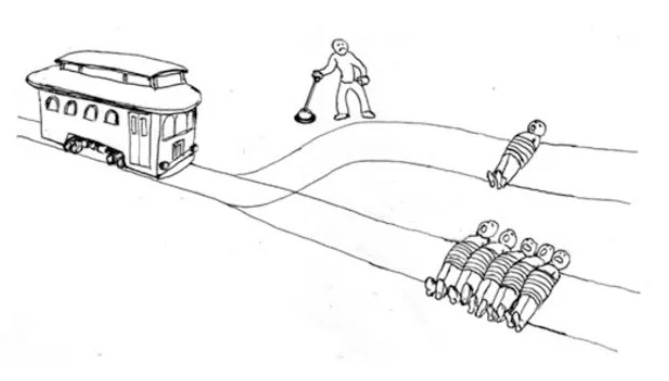
The moral dilemma of "killing one and saving five" has been around since 1967 when the English philosopher Philippa Foot first raised it. Up to now, there is still no generally accepted “correct answer”. Not only that, but many more complicated versions have appeared. If you are interested, check out Wikipedia.
Most people are obsessed with debating which of these two philosophies is more correct: Utilitarianism, which supports "killing one and saving five", because it can achieve the maximum benefit for the greatest number of people; or Kantianism, which opposes "killing one and saving five", because "Thou shalt not kill" is a moral obligation of a human being. Some people disagree with both philosophies.
However, a lot of folks neglect the reason why Foot first raised this dilemma. She introduced this problem as part of an analysis of the “doctrine of double effect" from the "Summa Theologica" written by the greatest medieval theologian St. Thomas Aquinas (1225-1274).
Many of humanity's moral dilemmas can be resolved with this ancient principle from theology. It teaches us:
One may perform a good action even if it is foreseen that a bad effect will arise only if four conditions are met: 1) The act itself must be good. 2) The only thing that one can intend is the good act, not the foreseen but unintended bad effect. 3) The good effect cannot arise from the bad effect; otherwise, one would do evil to achieve good. 4) The unintended but foreseen bad effect cannot be disproportionate to the good being performed.
The most fundamental moral principle of medical ethics is primum non nocere, “First, do no harm.” This used to be the most widely used example of the “double effect principle”. Why used to be? Look how governments of various countries have manipulated, centralized, expanded and abused their power in the name of Covid-19 epidemic prevention, which in the end only tortured many. How many people have been forced to be vaccinated and then forced to live with serious diseases and sequelae for a lifetime? Even more regrettable is how many people have lost their lives or lost their loved ones due to vaccination.
Primum non nocere. Did those "experts" bothered to study the side effects and harm that the Covid-19 vaccine might cause to the human body before advocating hasty global application? Leaders from all over the world swarmed blindly to follow each other, fearing that they would not be able to catch up with other leaders, but had anyone seriously thought about whether the vaccine would harm his/her people?
If more people remember and follow this moral principle from 750 years ago, we can have a better world, a safer world with more conscience and medical ethics.
Curiously, the Chinese version of Wikipedia eliminated the "doctrine of double effect" from the the explanation of the trolley problem. Why? Only God knows. Fortunately, the English version has not yet been "corrected".
“Shall we kill one and save five?” has been argued for almost 60 years. Lee Tong-gun, a 23-year-old South Korean writer, has ambitiously challenged this moral dilemma and magnified it hundreds of millions of times in his very popular (in Asia) debut book The Flower of Death. It has these sensational subtitles:
I killed 223 people and I demand an acquittal.
Yes, they were killed by me, but they are sacrifices made to save humanity.
I must say, the publisher’s successful packaging caught my attention, and I dug out my wallet and bought the book.
You might immediately say, "That depends on whether these 223 people should die. Are they innocent? Or did they deserve it?"
You asked the first question (condition) of the "doctrine of double effect": Is the act of killing these 223 people good in itself?
Another question is, since it is to save mankind, did the author intend to answer whether we can kill 223 people and save 8 billion people?
The Flower of Death begins like this:
Two disabled people (one blind, one deaf) were kidnaped. The police rapidly found the two in a public bathroom of a bank. They also located and arrested the kidnapper, Li Yinghuan. The police were able to solve the case quickly not because they had strong capabilities, but because Li Yinghuan provided the precise location of the crime scene. What is even more surprising is that Li Yinghuan cured the disabilities of two hostages in that public bathroom - the deaf can hear and the blind can see now.
Li Yinghuan was interviewed by the media immediately at the police station (obviously, he himself informed the media). He declared to the Korean nation that he possesses medical techniques that can cure all diseases, except for mental illnesses. He promises that any disease can be cured by him with a simple operation within 30 minutes to one hour. The failure rate of the operation is zero, and there are no side effects. He emphasized that this is not a religion or quasi-science, but perfected medical techniques that can be proved by science and mathematics.
Li Yinghuan said that he wants to save all human beings suffering from diseases and disabilities. He is willing to disclose all his medical techniques to the entire world, but on this condition:
I must be pardoned or acquitted in court for all crimes I have committed to develop and master those medical techniques.
Has the plot caught your attention? Sounds like something interesting to read, right? Are you like me, your curiosity was provoked by the author? From the subtitles of the book, we learned that 223 people were killed, but how and why did they die? What crime did Li Yinghuan commit? Did he kill people? Why did he kill? Why would he seek innocence in such a public way?
Let’s continue.
As soon as Li Yinghuan finished the interview, he confessed that there were eight more hostages. The police found these based on the location Li Yinghuan provided. These eight hostages gave the same testimony as the previous two hostages who were blind and deaf. Li Yinghuan is a god, they said. He cured my ills and saved me from illnesses.
A total of ten people who were cured by Li Yinghuan became the darlings of the media. Everyone wanted to know what happened and how Li Yinghuan treated them. They were examined and studied by domestic and international doctors and experts. All of them had suffered from serious diseases and were on the verge of death, but those diseases had disappeared miraculously, and the patients had fully recovered and returned to health. No one can explain these cases from a standard medical point of view. The only explanation is that Li Yinghuan cured them.
Li Yinghuan is still in the police station for kidnapping. Calls for "Save Li Yinghuan" began to ring out across the country. New religions have also begun to hype that "Li Yinghuan is a 'god' who came down to save human beings who are about to die of illness. We will do whatever it takes to rescue the 'god' who is being detained."
Among the people who support Li Yinghuan is the second main character of the book - lawyer Park Jae Joon. Park Jae Joon is an elite in the legal profession and the ace of his firm. He seems to have everything, but he has a daughter suffering from terminal malignant brain tumor. Seeing the news that Li Yinghuan can cure all kinds of diseases, Park Jae Joon kindled hope like catching a piece of driftwood in the ocean. He believes that "as long as he becomes Li Yinghuan's defense lawyer and allows him to be acquitted, his daughter will be able to receive treatment first."
Park Jae Joon is the stupidest, most desperate, and most pathetic character in the whole book. Because he wanted to save his daughter wholeheartedly, he turned a blind eye to the obvious facts that were always in front of him.
Here’s where it becomes strange. At the same time and at the same place when the eight cured hostages were found, the police also found eight corpses with distorted joints and blackened bodies and internal organs.
Li Yinghuan openly admitted that he kidnapped and killed these people. "Yes, I killed them. But rather than 'killing', it's more like a sacrifice to save mankind."
Reading up to here, my heart is half cold. I smell blood, violence, and cruel images which have become standard scenes in Korean drams/movies in recent years.
Unfortunately, my sense of smell was correct. But, what I didn’t know was that the picture described by the author was completely beyond my imagination.
The patients cured by Li Yinghuan no longer appear, but the number of corpses found by the police increase day by day. What is even more frightening is that, just like the first eight corpses, all the dead showed patterns of gruesome death, like those in B-level horror movies.
These people all died from human experiments by Li Yinghuan. What kind of experiment? Li Yinghuan explained it himself proudly:
"I artificially created diseases and disabilities on kidnappees first, and then cured them. Then, I will cause them to have diseases and disabilities again, and cure them. This process is repeated until the kidnappee dies. "
Li Yinghuan killed a total of 223 people in such a brutal way. This included 50 children or babies under the age of three which were born in his human experiments.
To be more precise, there should have been 244 dead in total, but 21 of them were conceived before 24 weeks and were ruled in court as miscarriages, not murders.
In the first trial, prosecutor Jang Dong-hoon exposed Li Yinghuan's brutal, inhuman, and perverted behavior. Jang Dong-hoon is the third main character of the book. He was called “the righteous warrior in the legal field”. His distinctive cynical personality came from his grief and indignation. When he was a child, he witnessed his parents being ferociously murdered by a stranger “looking for someone to kill” on the street.
If a cold-blooded, random murderer like Li Yinghua is not sentenced to death, Jang Dong-hoon’s would go mad. He would kill the devil with his own hands to do justice for the heavens.
Jang Dong-hoon released in court the horrible photos of those who died in the human experiments of Li Yinghuan:
A female victim’s joints were distorted and deformed, like a jointed doll. All the joints were broken indiscriminately. Her skin was as black as if it had been burned, and her whole body was covered with cancer cells and various skin diseases.
The victim was a woman, but she had male and female genitalia. Li Yinghua's human experiments resulted in her growing male genitalia naturally. Her height is more than three meters, and her left arm is more than two meters.
A male victim in his twenties found a uterus in his internal organs, which was also caused by human experiments. The victim became pregnant without having sexual relations, and the DNA of the baby was 100% identical to the victim's DNA, which means he copied himself and became pregnant.
The prosecutor Jang Dong-hoon used these heinous photos to illustrate the demonic crimes, but Li Yinghuan smiled at them from beginning to end, and sometimes nodded in admiration.
Before the end of the first trial, the judge gave Li Yinghuan the opportunity to conclude his defense. He said with a laugh:
I killed 223 people and was locked up for about two months. During those two months, at least 600,000 people worldwide died of cancer. And I could have saved those 600,000 people. Now, these 223 people killed those 600,000 people. Judge, I committed no crime. I am just trying to save mankind.
The trials was over. Li Yinghuan was sentenced to death.
THANK GOD.
The entire nation was furious about Li Yinghuan's evil deeds. The family members of the victims initiated a joint petition, demanding that the government immediately execute Li Yinghuan.
However, such a request was protested by those who supported "Save Li Yinghuan". People who were born with serious diseases, parents whose children have rare diseases, blind/deaf folks, mentally retarded people, those with terminal illness and incurable diseases, etc., refused to lose the opportunity to be cured. To them, Li Yinghuan existed like a god. Li Yinghuan couldn’t die, because only he could save them and their children.
The country is split into two factions, one saw Li Yinghuan as a murderer, of course he deserved to die; the other saw Li Yinghuan as the savior of mankind, of course he deserved to live. The author spent a lot of space describing how people on both sides were arguing about this moral dilemma, as if a civil war was about to start.
I understand the author's ambition and intention to magnify the "trolley problem" hundreds of millions of times. He thought that "killing 223 people and saving 8 billion people" would be a much more difficult moral dilemma than "killing one person and saving five people".
Surprisingly, many readers also read The Flower of Death as a novel exploring trolley dilemmas, which aroused many discussions and echoes on the Internet. Examples are: "The Flower of Death, with the classic trolley problem as the main axis, challenges readers to think about moral dilemmas.", "I think The Flower of Death can be regarded as a follow-up to the trolley problem.", "This story challenges everyone's balance and trade-off between morality, ethics, justice and personal interests, making the plot full of conflicts, just like the famous Trolley problem." and so on.
But, my friends, the "Trolley problem" does not apply to The Flower of Death, because what the book described was not an unsolvable moral dilemma problem. This book discussed that when you face a demon, will you choose to execute him, or cooperate with him?
Li Yinghuan is clearly a pervert, a murderer who killed without blinking an eye, and a devil.
The devil is the product of moral depravity and moral crime. Where is the moral dilemma in the face of the devil?
None.
Judging from primum non nocere, which used to be first principle of medical ethics, Li Yinghuan deserved to die. He and his brutal human experiments murdered 223 people who had no grievances with him.
Judging from the "doctrine of double effect" of St. Thomas, Li Yinghuan deserved to die. The four conditions are as follows:
1) Was the act itself good? Of course not. Li Yinghuan’s human experiments were cruel, and inhuman. They were morally depraved crimes.
2) Was the intention of the act good? Of course not. Li Yinghuan was a deliberate murder, resulting in the tragic death of 223 people.
3) Did the act use evil means to achieve good ends? Of course yes. Even if Li Yinghuan really wanted to save the world, he couldn't murder 223 people. He did evil to achieve good. Even if Li Yinghuan save 8 billion people, he would not be able to turn the "evil" deed of murdering 223 people into a "good" deed.
4) Did bad outcomes outweigh good outcomes? Yes. Murder is murder, no matter how you look at it. It is an unforgivable act. Moreover, the consequences of Li Yinghuan's human experiments would cause disasters in human history, even destruction.
Therefore, to deal with the devil Li Yinghuan, the only option is to execute him. That is the only choice.
For those who support "Save Li Yinghuan", including lawyer Park Jae Joon who defended Li Yinghuan in order to save his daughter's life, those who were terminally or congenitally ill and their families, worriers who fear that they or their relatives would get sick in the future, as well as government, institutions, and unscrupulous people who wanted to use Li Yinghuan's ability to gain benefits (power, money, etc.), they were not choosing between opposite ends of the moral scale.
They chose to cooperate with the devil. They chose to make a deal with the devil.
Once a person does that, even the Almighty God cannot save you.
"What's the end?" you ask. Is Li Yinghuan dead?
After the trial, lawyer Park Jae Joon saw the government's hesitation about whether Li Yinghuan should be executed. Even though he agreed too that Li Yinghuan was a demon, he had to figure out a way to get Li Yinghuan acquitted. Li Yinghuan promised to give priority to treating his daughter's brain tumor.
Park Jae Joon was in a hurry and thought of an appeal. "Evidence!" Everyone only saw the results of Li Yinghuan's healing power. No one saw his cures with his/her own eyes. There were no videos, no photos, and no evidence. As long as it could be proved that Li Yinghuan had the skills to cure all diseases, in other words, as long as the government believed that Li Yinghuan could really cure all diseases, the government would save him and let him be pardoned by the president.
Park Jae Joon succeeded. He won the opportunity for Li Yinghuan to broadcast a treatment live in front of the people of the whole country.
Unsurprisingly, Li Yinghuan successfully cured a few patients suffering from terminal illness and congenital malignant diseases in front of the world.
Li Yinghuan got the president's amnesty as he wished.
Poor Park Jae Joon (didn’t I say he is the saddest character in the whole book?) rescued Li Yinghuan, but the author, without explanation, has the devil cut him and his daughter off ruthlessly after being pardoned. The little girl died of the severe disease.
Park Jae Joon chose to cooperate and trade with the devil, what did he get?
The cold body of his daughter.
Prosecutor Jang Dong-hoon, the righteous warrior, managed to meet Li Yinghuan after he had been freed. After a few pleasantries, he took out a knife hidden in this pocket and stabbed it into Li Yinghuan's throat. Executing him.
He acted for the heavens and killed the devil Li Yinghuan.
Jang Dong-hoon put an end to the evil deeds that almost changed the destiny and history of mankind. However, this righteous warrior of mankind became the defendant. At his trial, no defender as brave as he was came to his rescue. Jang Dong-hoon was sentenced to 43 years in prison and was put into jail
In prison, Jang Dong-hoon was oppressed and bullied all day long. People couldn’t forgive him for killing the "savior" Li Yinghuan. Worse still, Jang Dong-hoon lost his left eye and unfortunately got cancer. (I really don't understand why the author punished Jang Dong-hoon like this. He was a good man who carried out the will of the Heavens. Didn’t we say “one good turn deserves another?” The author’s choice is puzzling me. )
Fourteen years later, Jang Dong-hoon was released from prison due to his illness. He had always kept in mind a set of mysterious numbers revealed by Li Yinghuan before his death. He guessed it was a latitude and longitude. Following the positioning information, he found a hut hidden in the mountains. In the hut are Li Yinghuan's systematic treatment records. Medical methods and descriptions, documents, photos, and notebooks of various diseases and terminal illnesses were all stored here.
Jang Dong-hoon looked around and was shocked. On the side of the hut, he saw a file label:
「Raise Dead」
In the file folder is the record of Li Yinghuan's operation on a woman. The 223 people killed by Li Yinghuan were deeply engraved in Jang Dong-hoon's mind. This woman was not among the 223 victims.
"The cure for my cancer, and the techniques that can bring the dead back to life, are by my side. I also know very well that Li Yinghuan can cure my disease. However, I still chose to kill him." Jang Dong-hoon laughed out loud.
Li Yinghuan still deserves. . . .
The Flower of Death ended here.
Yes, you read that right. This book ended inexplicably and abruptly.
Fortunately, this book is not long, and the pace is fast. There is no complicated logic to think about, and it can be read in a few hours of concentration. But what exactly did I read?
I'm at a loss.
In recent years, Korean dramas/movies have swept the entertainment world. When you open Netflix, it’s all Korean dramas. Before you finish watching a drama series, the next Korean drama which is rated as “Must See!” has already appeared. I admit that I'm also a fan of Korean dramas.
However, since "Parasite" won four Oscars (Best Picture, Best International Film, Best Original Screenplay, and Best Director) in 2020, setting a record as the first non English-language film to win Oscar for Best Picture, blood, violence, cruelty, thriller, and horror seem to have become essential elements for Korean dramas or Korean movies to sell well.
The Flower of Death is full of these elements, and was clearly written to be adopted by Netflix (or other streaming media). The author did successfully get some readers to demand it to be made into a Korean drama or a movie. However, perhaps because of this, The Flower of Death was trapped into standard Korean drama formulas and exaggerated plots. It lacked innovation, freshness, and depth.
A few thoughts to share:
Cooperating with the devil is not a Trolley problem.
This point has been explained in detail in the previous paragraph.
The author kept giving Li Yinghuan the name of God. I believe he doesn’t know much about Christianity. Li Yinghuan is not a god, he is a devil.
God loves all his children, and he does not love one more and one less. Imagine two fathers are trying to compare who loves their children more than the other. Would they be able to tell the difference? No. It is absolutely impossible for God to sacrifice the life of any of His children for the health of another. Both children are God's treasures.
Li Yinghuan isa cold-blooded murderer. Only a devil could have done what he did. Since he is a devil, he cannot be a god.
The idea of The Flower of Death is good, but unfortunately the content is only superficial and lacks depth.
It is not easy for the author to have a novel published and translated into other languages at a young age. But this story obviously came from a young writer who is not deeply involved in the world. The story lacks depth in many places. The author spent a lot of pages to describe the corpses subjected to human experiments in an extremely delicate and terrifying way. But he rarely described the dark side of Li Yinghuan's inner world. I think this is the most regrettable part of the book. For example: What kind of mental journey made him carry out such cruel human experiments and became an inhuman, random murderer? He had Park Jae Joon and other characters wrapped around his little finger, so what kind of thoughts did he have, and so on.
Having a vivid description of the crimes he committed is interesting, but what the audience wanted to know most is why, why did he do it.
Li Yinghuan’s inconsistency in intelligence, behavior, and speech
This confused me the most in reading. The author had successfully portrayed Li Yinghuan as a genius and a devil in one. He must be a genius with a record breaking IQ in order to have such precise knowledge and skills to cure all diseases. However, in his conversations with Park Jae Joon and other characters, he talked a lot using boring miscellaneous trivia. He often behaved like an adolescent boy who was restless and impatient. And, he seemed to only care about when he could be pardoned. All of these were completely out of proportion to his supposed extraordinary intelligence.
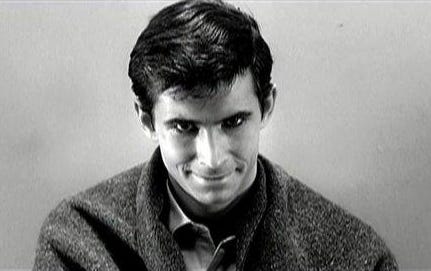
The author is very young. He was born 40 years after the death of Mr. Hitchcock, the master of suspense movies. If the author has watched the horror movie Psycho directed by Mr. Hitchcock, he may be able to describe Li Yinghuan more vividly. True horror is mostly quiet, low-key, and silent. Like Norman in Psycho, he spoke very little, and was quiet, calm, and gentle like a good boy next door, but every time he appeared on the screen, he scared the audience with fear.
Look at him!
The standard Korean anticlimactic ending made people want to smash the book.
In recent years, Korean dramas have become popular with ambiguous, unclear and unclear endings. Getting the audience to think about what's going to happen next has become a standard formula. In some scenarios (especially those that are preparing for a next season), this trick may be effective, or even interesting. However, it didn’t work for The Flower of Death at all.
The Flower of Death could have ended brilliantly. Here are three possibilities:
a. Jang Dong-hoon set fire and burned all the medical records that Li Yinghuan created due to human experiments, ending this evil deed that would cause panic among human beings. This would be consistent with his character as a righteous warrior.
b. In the hut, Jang Dong-hoon found a letter written by Li Yinghuan. It turned out that Li Yinghuan was his bastard son. Li Yinghuan turned himself into a demon all his life to get revenge on his father who abandoned his mother. And Li Yinghuan was finally killed by his father, which can be regarded as to carry out the God’s will. This can also explain the reader's doubts, why Li Yinghuan became who he was.
c. In order to cure his own cancer and blindness, and also for money, Jang Dong-hoon sold all the records of Li Yinghuan. Although he cured his disability, he witnessed the whole world collapsed due to his greed. In addition to the constant rebirth of human beings, replicants, monsters, cyborgs, etc. are all over the street. The whole world is going to destruction because of Jang Dong-hoon's choice.
Do you have similar experiences? Some books, before you finished reading them, had already been tagged by you as "I won’t let go until I die". Even if you have read them several times, you still relive them from time to time. And some books were abandoned by your soul before you finished reading them. You finished it only because you needed to know the ending. Who did it? Why?
The Flower of Death belongs to the latter. I endured the reading, but am at a loss. I have no clue what the author was exactly trying to say.